Showing posts with label free open access meducation. Show all posts

Saturday, October 11, 2014

Euboxia - Not Necessary (Or Necessarily Normal)

The Gist:  In medicine, we historically strive towards achieving values that fall within a reference range, or are normal, a phrase coined "euboxia" [1].  Targeting treatments to normalize values may not result in patient-oriented benefit and may cause harm.  We must also consider that normal values may not necessarily be normal for our patients.  Data fatigue, the exposure to copious data, may lead to ignoring values that are not flagged as abnormal, regardless of the appropriateness for a patient.
"'Euboxia' (from the Greek 'eu' meaning good, normal or happy, and 'box' from the tradition of writing physiological variables in boxes) is a colloquial word used in many North American and other hospitals to describe the state of apparent perfection aimed at by residents by the time they present their patients on morning rounds" - MC Meade [2].
Euboxia Is Not Always Necessary
Chris Nickson's Free Open Access Medical education (FOAM) post on Euboxia highlights some of the pitfalls with this obsession with normalcy. He also delivered a talk Euboxia and (ab)Normality at SMACC Gold which will hopefully be available on the SMACC podcast in the near future. A few examples include:
  • Hemoglobin transfusion trigger in anemia - Studies such as TRICC, CRIT, SOAP, and TRISS demonstrate that transfusion targets of more "normal" hemoglobin levels is not advantageous and may incur increased risks.  As such, transfusion triggers, in the absence of active myocardial ischemia, have moved to <7 g/dL while uptake of this trigger remains low in some communities [4]. 
  • Oxygen saturation in COPD - Unless patients are under duress, guidelines suggest patients with COPD have oxygen saturations targeted to 88-92% rather than the 98-100% more often associated with perfection [5]
  • Blood gas and saturations in ARDS - Guidelines for ventilation in patients with ARDS aim to protect the lungs using low tidal volumes and plateau pressures at the expense of allowing a pH of 7.20, permissive hypercapnia, and lower oxygen saturations of 88-95% (paO2 55-80 mmHg).  Correction of these lab abnormalities may come at the cost of additional lung damage by means of higher pressures or volumes and are thus discouraged [6].
Euboxia Is Not Necessarily Normal
Euboxia, however, may fool also practitioners into a false sense of security.  Failure to truly see a value that appears normal and isn't flagged, red, or outside of the box may be problematic. A few examples:

Normotension - Hypotension typically refers to systolic blood pressure <90 mmHg or a drop in systolic blood pressure >40 mmHg.  The latter part of this definition is often unable to be determined (due to lack of information) or forgotten.  The trauma literature seems to have solidified around the notion that the widely accepted definition of hypotension does not apply to many trauma patients, particularly those > 65 years old, and that 110 mmHg is probably a better cutoff [9-12].  While these recommendations have been out since 2011,  90 mmHg remains the common cut point for hypotension.
  • The CDC triage guidelines/"National Trauma Triage Protocol" have suggested <110 mmHg as the new hypotension guideline in patients > 65 years of age as multiple registry studies have demonstrated that an SBP <110 mmHg is associated with increased mortality and has an improved AUC compared with other blood pressure cut offs [9]. 
    • An abstract presented at AAST in 2014 found that patients >65 y/o with an SBP 90-109 mmHg had an odds of mortality of 9.7 (95% CI 8.7-10.8, p<0.01).  This survey study found improved, but terrible sensitivity for Trauma Center Need (ISS>15, ICU admit, urgent OR, or ED death) with the higher SBP cut-off [10].
Normal White Blood Cell Count (WBC) - Leukocytosis is often used as a predictor of infection/inflammation and historically loved by surgical services, yet the operating characteristics don't perform that well.  During a lecture as a medical student Dr. Sean Fox (PEM Morsels) shared the following perspective on the WBC, "WBC is the last bastion of the intellectually destitute."
I soon discovered that the sensitivity and specificity of leukocytosis, or the absence thereof, wasn't helpful in many situations.
  • In acute cholecystitis, for example, the WBC proves unhelpful as demonstrated by the following operating characteristics for leukocytosis: +LR 1.5; -LR 0.6; Sensitivity 63%; Specificity 57% [13].  Thus, a normal WBC does not help rule out acute cholecystitis.  Similarly, a normal WBC does not exclude acute appendicitis, although values <8 (a normal value) may have some utility in this regard according to Bundy et al.  
Normal Potassium in DKA - The reference range for potassium runs approximately 3.5-5 mEq/L.  Patients presenting in DKA may have low normal potassium concentrations but have severe total body potassium deficits.  As a result, professional societies recommend withholding insulin if a patient has a potassium <3.5 and supplementing potassium even when values are well within the upper "normal" limit of 4-5 mEq/L [14].  Despite these teachings and nearly habitual practice, without mindful attention to the potassium the "normal" lab value could easily be ignored. 

Normal Lactate - Lactate is beloved in Emergency Department (ED) care and it's well accepted that elevated lactate values predict mortality.  Yet, normal lactate levels may be falsely reassuring.  Lactate has been used as screening test in mesenteric ischemia as small, early reports yielded a sensitivity of 100% [15].  More recent analysis, however, show that the +LR 1.7 (1.4–2.1), -LR 0.2 (0–2.9) for L-lactate.  The -LR for lactate crosses 1.0, demonstrating that a normal lactate is not useful in crossing mesenteric ischemia off the list [16].  While we may cognitively understand this notion, in practice I think we quite often feel reassured by normal lactates (or reassure the admitting teams).

What to do?
Data overload and obsession may engender a sort of "data fatigue."  It is difficult to notice abnormalcy in data that may appear, for most individuals, normal.  This may be particularly arduous in a sea of numbers.  Furthermore, our attention is typically drawn to the red or flagged "abnormal" numbers.  This is not to suggest that we should agonize over every value and cannot trust anything "normal."  Rather, it seems that the signal in medicine is that tests and parameters are only as good as the context of the patient and the provider interpreting them. Here's what I'm trying, to combat my own data fatigue and subconscious euboxic thinking:
  • Think about a patient's clinical context, which requires mindfulness in the fast pace and overwhelming environment we call an ED.
  • Order a test?  Review the results (really), paying attention and process the results in the context of the patient.
  • If possible and appropriate, prevent data overload and data fatigue by ordering tests that will add value to the care of the patient.
References:
1.  Reade MC. The pursuit of oxygen euboxia. Anaesth Intensive Care. 2013;41(4):453–5.
2.  Reade MC. Should we question if something works just because we don’t know how it works? Crit Care Resusc. 2009;11(4):235–6. 
3. Nickson CN.  Don't Put Your Patient In A Box.  Life in the Fast Lane. 
4. Carson JL, Grossman BJ, Kleinman S et al.  Red blood cell transfusion: a clinical practice guideline from the AABB.*Ann Intern Med. 2012 Jul 3;157(1):49-58.
5. Abdo WF, Heunks LM. Oxygen-induced hypercapnia in COPD: myths and facts. Crit Care. 2012 Oct 29;16(5):323. 
6.The Acute Respiratory Distress Syndrome Network (2000) Ventilation with low volumes as compared with traditional tidal volumes for acute lung injury and acute respiratory distress syndrome. N Engl J Med 342:1301-1308 
7. Putensen C, Theuerkauf N, Zinserling J et al. Meta-analysis: ventilation strategies and outcomes of the acute respiratory distress syndrome and acute lung injury. Ann Intern Med. 2009 Oct 20;151(8):566-76.
10. Brown JB, Gestring ML, Forsythe RM et al. Systolic Blood PRessure Criteria in the National Trauma Triage Protocol for Geriatric Trauma: 110 is the new 90.  Oral Abstracts, AAST July 2014.
11. Eastridge BJ, Salinas J, McManus JG, et al. Hypotension begins at 110 mm Hg: redefining “hypotension” with data. J Trauma. 2007;63(2):291–7; discussion 297–9.
12. Oyetunji TA, Chang DC, Crompton JG, et al. Redefining hypotension in the elderly: normotension is not reassuringArch Surg. 2011;146(7):865–9.
13. Trowbridge RL, Rutkowski NK, Shojania KG. Does This Patient Have Acute Cholecystitis? JAMA. 2003;289(1):80–86.
14. Kitabchi AE, Umpierrez GE, Miles JM, Fisher JN. Hyperglycemic crises in adult patients with diabetes. Diabetes Care. 2009;32(7):1335–43. 
15. Lange H, Jäckel R. Usefulness of plasma lactate concentration in the diagnosis of acute abdominal disease. Eur J Surg. 1994;160(6-7):381.
16.  Cohn B.  Does This Patient Have Acute Mesenteric Ischemia?  Ann Emerg Med. 2014 Jan 30

Saturday, August 16, 2014

Open to Interpretation: Do Not ______

The Gist:  DNR (Do Not Resuscitate) orders are subject to variable interpretation by providers and patients whereas Physician Orders for Life Sustaining Treatments (POLST) are becoming increasingly common and have more specific, meaningful directives. As critical care providers, we should understand the meanings behind each of these documents, as well as the limitations.  The Annals of Emergency Medicine August 2014 podcast has a fantastic Free Open Access Medical education (FOAM) discussion of DNRs and POLSTs as they pertain to the physician in the Emergency Department (ED).  Despite these helpful aids, nothing replaces discussions with patients and their family members or health care proxies about treatment that is clinically appropriate and congruent with the patient's goals.

The Case:  A 82 y/o male presents to Janus General in respiratory distress, 72% on 4L of oxygen via nasal cannula up to 92% on 15L non-rebreather from the rehab facility where he is recuperating from a fractured tibia.  Previously in excellent health, he has been febrile and confused for the past two days with radiographic and clinical diagnosis of pneumonia and therapy with azithromycin and ceftriaxone at the facility.  Patient has a signed DNR order and an advance directive stating that for an irreversible/terminal condition the patient would not want artificial support.  The health care proxy is unavailable by phone and the patient lacks a clear sensorium but is in respiratory distress, appears septic, and has a chest x-ray with clear infiltrate and interstitial pattern that may indicate early ALI/ARDS.
  • What should happen?  BiPAP?  Morphine? Intubation?  What's this patient's disposition?  At Janus General, the providers in the ED and the inpatient team disagreed about what the patient's course should be, whether or not the condition was "reversible," and what the patient would want in this situation.  
In a recent post I shared a talk on tips for palliative care in the ED setting.  Despite our best efforts in the ED, uncovering documents such as DNRs and advance care directives may obscure the picture more than provide clarity.  I discovered on rotations through critical care units that the presence of a DNR seemed to bias both myself and my colleagues regarding the care of patients that was unrelated to the performance of cardiopulmonary resuscitation.  I believe we acted based on what we felt was clinically appropriate in the patient's situation but upon closer inspection, I think we were occasionally subject to a touch of another form of bias - The DNR bias.

The Do Not Resuscitate (DNR):  A medical order that specifies one not initiate cardiopulmonary resuscitation (CPR) in a patient who has died (pulseless/apneic) [1].
  • Technically, applies to a dead patient.
  • Does not indicate a patient's general wishes for medical care, only their preference regarding initiation of CPR. 
The Problem With The DNR
DNR orders, which technically only speak to a patient's wishes to receive CPR, have variable interpretations amongst healthcare professionals and, likely, patients [2-4].  The issue lies in the word "resuscitate," which may be used to include fluids, antibiotics, vasopressors, advanced means of ventilation or, at the extreme, CPR.
  • The TRIAD II-IV studies surveyed EMS personnel, physicians, and medical students respectively and provided the participants with an advance care directive as well as case scenarios.  The participants then indicated whether a patient was a DNR or full code and the appropriate action.  Both physicians and EMS providers performed poorly and variably, indicating that the directives were not clear [2,4].
DNR orders may mean that patients receive care that differs from their wishes or standard medical practice.  This demonstrates that the DNR bias may exist, even if it's partially a reflection of a patient's general clinical situation.
  • Aspirin is a non-intensive and relatively safe standard intervention in patients with acute myocardial infarction (AMI) (NNT=42, NNH=167). In patients with an AMI, the Worcester Heart Attack study demonstrated a negative association between aspirin administration and those patients with a DNR [5].  Of note, the individuals in this study with a DNR were "sicker," meaning they had comorbidities or other poor prognostic signs such as shock.  Other markers of more aggressive care such as PCI, thrombolytics, and cardiac catheterization, were also reduced in the DNR cohort.  Therefore, it is possible that this association may represent the belief that these patients were not candidates for these interventions independent of their DNR status.
  • The Worcester Heart Failure study also demonstrated that patients with a DNR were less likely to receive any quality assurance intervention than those with no DNR (HR 0.52, adjusted HR 0.63- 0.4-0.99) [7].  This may have been appropriate given the clinical situation of the patients.
But, it's not all about the co-morbidities:
  • Residents in Missouri nursing homes with a DNR were less likely to be hospitalized following a LRTI (OR 0.69; 0.49-0.97).  Compared with the Worcester Heart Attack study, patients with comorbidities were more likely to receive aggressive treatment (hospitalization) than those without a DNR (excluded patients with a Do Not Hospitalize order) [7].  
The Physician Order for Life Sustaining Treatment (POLST)Physician orders, on a standardized form, that are designed to transfer amongst settings, following an individual from home to hospital and nursing home/rehabilitation facilities.  Most states have POLST programs or are in the process of developing them these programs (map of programs) and some have online registries for providers, mitigating issues with located print copies.  Jesus et al give a good rundown of POLSTs in the ED in Annals of Emergency Medicine, August 2014 [8].

These may be more meaningful in the critical setting of the ED as they may indicate a patient's preference for a broad array of clinical conditions encountered.  For example, in Massachusetts, the back portion of the MOLST resembles a sushi menu where individuals can opt to specify whether they would accept non-invasive ventilation, dialysis, artificial hydration or nutrition and, if yes, whether temporarily or permanently.

Issues with POLSTs:
  • Require a physician signature and require either medical literacy or a good deal of physician explanation.  
  • It is possible that only the sickest patients or those with terminal illnesses may be prompted to have a POLST.
  • Components are still open to interpretation by providers as the reversibility or predicted length of therapy are often difficult to determine upon initiation.  
  • The FOAM blog, GeriPal, has an interesting discussion on the semantics prevalent in the POLST.  For example, the connotation of the word "only" following Comfort Measures is not necessary and undermines the intensive work often required for end of life comfort.  The blog offers some suggestions that may surface as POLSTs become increasingly adopted.
References:
1. Dugdale DC. .Do Not Resuscitate Orders."  MedlinePlus Medical Encyclopedia.  
2.  Mirarchi FL, Kalantzis S, Hunter D, McCracken E, Kisiel T. TRIAD II: do living wills have an impact on pre-hospital lifesaving care? J Emerg Med. 2009;36(2):105–15. doi:10.1016/j.jemermed.2008.10.003.
3. Mirarchi FL, Costello E, Puller J, Cooney T, Kottkamp N. TRIAD III: nationwide assessment of living wills and do not resuscitate orders. J Emerg Med. 2012;42(5):511–20. doi:10.1016/j.jemermed.2011.07.015.
4.Mirarchi FL, Ray M, Cooney T.  TRIAD IV: Nationwide Survey of Medical Students' Understanding of Living Wills and DNR OrdersJ Patient Saf. 2014 Feb 27. 
5. Gurwitz JH, Lessard DM, Bedell SE, Gore JM. Do-Not-Resuscitate Orders in Patients Hospitalized With Acute Myocardial Infarction. 2014;164.
6. Chen JLT, Sosnov J, Lessard D, Goldberg RJ. Impact of do-not-resuscitation orders on quality of care performance measures in patients hospitalized with acute heart failure. Am Heart J. 2008;156(1):78–84. doi: 10.1016/j.ahj.2008.01.030.4. 10.1002/jhm.2234
7. Zweig SC, Kruse RL, Binder EF, Szafara KL, Mehr DR. Effect of do-not-resuscitate orders on hospitalization of nursing home residents evaluated for lower respiratory infections. J Am Geriatr Soc. 2004;52(1):51–8. 
8. Jesus JE, Geiderman JM, Venkat A, et al. Physician Orders for Life-Sustaining Treatment and Emergency Medicine: Ethical Considerations, Legal Issues, and Emerging Trends. Ann Emerg Med. 2014;64(2):140–144. doi:10.1016/j.annemergmed.2014.03.014.

Thursday, July 17, 2014

CRITICAL Care - End of Life in the ED

The Gist: Palliative care is an emerging field in Emergency Medicine and most of us are inadequately equipped to discuss end of life issues, death and dying, which are all quite common in the Emergency Department (ED) [1].  We often feel uncomfortable in these situations as our instinct remains - resuscitate first, ask questions later. In a community that values cutting edge, critical care medicine, I was stunned when I realized that Free Open Access Medical education (FOAM) has engendered me to think twice about a procedure and take the time to ascertain what a patient actually wants.

These FOAM resources changed my course as a budding Emergency Physician and made me realize how ill equipped I was to handle dying patients, despite the frequency with which I encounter them.  As such, I felt compelled to use my slot at our residency conference dedicated to critical care to discuss end of life issues with my colleagues.  Here it is as FOAM, since I hassle others to share their talks.


The FOAM
SMACC GOLD (iTunes)
EMCrit with Dr. Ashley Shreves "Critical Care Palliation"
The Geripal Blog - The Importance of Language

The Take Home
Run these ABCD's in tandem with our typical ABCs (Airway, Breathing, Circulation) because the trajectory that we launch patients on matters - whether it's to the ICU with an endotracheal tube, to dialysis with a line, or a palliative care consult [1, 6-9,15].

Advance Care Directives (does the patient have one?), Ask the patient/caregivers what they want.
  • Identify if a patient has a health care proxy or physician order for life sustaining treatment (POLST).  
  • Use appropriate language, avoid jargon.  The phrase, "Do Not Resuscitate (DNR)," is falling out of favor and major societies are now using the language "Allow Natural Death"[3]. Try replacing DNR with "It sounds like she would want a natural death."  
  • Dying patients, even those with DNR orders, Comfort Measure Only orders, or those with Do Not Hospitalize directives come to the hospital because dying is hard, uncomfortable, and stressful.  Figure out what they want and need, it's not always a tube or a line.
Better - Make the patient feel better
  • Turn off monitors or beeping pumps (especially if they're beeping), generously dole out opioids for dyspnea/pain, offer various means of respiratory relief (non-rebreather, nasal cannula, non-invasive ventilation).
Caregivers - identify the patient's caregivers and Communicate with all parties in appropriate language
  • As above, use appropriate language, avoid jargon.  My favorite phrase, effective on nearly all patients, "What is most important right now?"
Decisions - offer medically appropriate decisions in ways patients and caregivers can understand.  Aggressive resuscitation and cardiopulmonary resuscitation (CPR) are appropriate in many situations, but not all.  Think about the downstream consequences, positive and negative, of various courses of action.
  • The publics perception of CPR is largely misinformed and studies show that most people overestimate the success of CPR to hospital discharge.  One study of patients over 70 years of age found over half believed survival after CPR was >50% and 23% believed survival to discharge was >90% after CPR [2].  Furthermore, people may not understand that CPR does reverse the underlying process and a patient is typically sicker after CPR than they were before.  Let patients know the implications of these decisions.  For example, once someone dies, CPR involves chest compressions which often result in broken ribs but sometimes restart the heart.  There's no guarantee that if we restart the heart that we will get his/her brain function back.
  • If appropriate, offer more than one option and recognize the power and responsibility that comes with the entrusted title of physician.  People do listen to provider recommendations [5].  For example, some patients may want aggressive testing and treatment for etiologies of dyspnea, some may want oral antibiotics for a pneumonia if it may improve their shortness of breath, and some may opt solely for opioids. 
References:
1. Members of the Emergency Medicine Practice Committee.  Emergency Department Palliative Care Information Paper June 2012.   ACEP 
2. Adams DH, Snedden DP. How misconceptions among elderly patients regarding survival outcomes of inpatient cardiopulmonary resuscitation affect do-not-resuscitate orders. J Am Osteopath Assoc. 2006;106(7):402–4. 
3. Breault JL. DNR, DNAR, or AND? Is Language Important? Ochsner J. 2011;11(4):302–6. 
4. Cassel JB, Kerr K, Pantilat S, Smith TJ. Palliative care consultation and hospital length of stay. J Palliat Med. 2010;13(6):761–7. doi:10.1089/jpm.2009.0379.
5. Cook D, Rocker G. Dying with Dignity in the Intensive Care Unit. N Engl J Med. 2014;370(26):2506–2514. doi:10.1056/NEJMra1208795.
6. DeVader TE, Albrecht R, Reiter M. Initiating palliative care in the emergency department. J Emerg Med. 2012;43(5):803–10. doi:10.1016/j.jemermed.2010.11.035.
7. DeVader TE, Jeanmonod R. The effect of education in hospice and palliative care on emergency medicine residents’ knowledge and referral patterns. J Palliat Med. 2012;15(5):510–5. doi:10.1089/jpm.2011.0381.
8. Lamba S, Mosenthal AC. Hospice and palliative medicine: a novel subspecialty of emergency medicine. J Emerg Med. 2012;43(5):849–53. doi:10.1016/j.jemermed.2010.04.010.
9. Lamba S, Quest TE. Hospice care and the emergency department: rules, regulations, and referrals. Ann Emerg Med. 2011;57(3):282–90. doi:10.1016/j.annemergmed.2010.06.569.
10. Schmidt TA, Zive D, Fromme EK, Cook JNB, Tolle SW. Physician orders for life-sustaining treatment (POLST): lessons learned from analysis of the Oregon POLST Registry. Resuscitation. 2014;85(4):480–5. doi:10.1016/j.resuscitation.2013.11.027.
11. Wright A a, Keating NL, Balboni T a, Matulonis U a, Block SD, Prigerson HG. Place of death: correlations with quality of life of patients with cancer and predictors of bereaved caregivers’ mental health. J Clin Oncol. 2010;28(29):4457–64. doi:10.1200/JCO.2009.26.3863.
12. Wu FM, Newman JM, Lasher A, Brody A a. Effects of initiating palliative care consultation in the emergency department on inpatient length of stay. J Palliat Med. 2013;16(11):1362–7. doi:10.1089/jpm.2012.0352.

Monday, June 23, 2014

Dip the Tap? - Diagnosis of Spontaneous Bacterial Peritonitis at the Bedside

The Gist:  Study results of urine reagent strips for the bedside diagnosis of spontaneous bacterial peritonitis (SBP) are highly variable with sensitivities from 45-100%.  Some suggest that certain dipsticks, if at least Grade 3 positive, have a great positive predictive value and positive likelihood ratio; thus, initiating treatment for SBP is likely a good idea.  A negative result, however, cannot rule out SBP, and this test is subject to limitations such as which reagent strip one has, what qualifies as "positive," and the prevalence of SBP at that location.  Suspect SBP or sick patient? Give antibiotics.

Why the enthusiasm in the Emergency Department (ED)?
A bedside test for diagnosis of SBP is neat and could potentially help identify an infective source earlier than standard laboratory tests (ascitic fluid cell count of >1000 WBCs or >250 polymorphonuclear neutrophils (PMNs) [1].  This laboratory endeavor takes time and reagent test strips commonly referred to as "urine dipsticks" have surfaced as a candidate.  Some studies cite a time "savings" of 2-3 hours using these strips as one may start targeted antibiotics after the bedside test [6].  In an era of source control and "time to antibiotics" measures in sepsis, early diagnosis of SBP has potential benefit.
Photo: Nottingham Vet School
Typical reagent strips, like the one above, demonstrate different grades of positivity, indicated by the color of the individual block.  Here, the leukocytes are indicated by the box on the far left of the image in which presence of leukocytes is quantified by reaction via leukocyte esterase.  These are read at the bedside after a certain period of time elapses (often 1-2 minutes), either by a person or machine. The pictured stick has a negative (off white), Grade 1 (slightly less off white), Grade 2 (lavender), Grade 3 (darker lavender/purple).

One important lesson that Free Open Access Medical education (FOAM) has hammered home, however, is the importance of understanding how to use a test prior to adoption.  On a recent episode of FOAMcast, we discovered that the core text, Rosen's Emergency Medicine references the positive correlation between SBP and a "positive" dipstick [1].  Unfortunately, the text doesn't go into how specifically to use the test or limitations, which could potentially lead to misapplication.  As an excited resident, I might opt to test this trick of the trade out without investigating exactly how it could or should change my practice. Furthermore, major societies currently recommend against the use of these test strips [2,3].

The Early Literature Hype
The initial studies were promising and cited sensitivity, specificity, Positive Predictive Value (PPV), and Negative Predictive Values (NPV) of 100% [4].  These studies also had relatively small numbers (n=31-257) and were conducted in a variety of settings with limited ED patients [4].  A positive test, in the majority of studies, was any result other than negative.  Some authors, including Gaya et al, called for the ability to rule out SBP based on a negative dipstick (Multistix 10SG) [5].

The Shifting Tide:  The many studies that subsequently followed had varied results and few were conducted in the Emergency Department (ED).  These studies used a variety of strips (Multistix - most commonly tested, Nephur, Combur, Uriscan, Aution Combina, and Choiceline) and demonstrated widely variable predictive scores with sensitivities of approximately 65% in nearly half of the studies and one study with a sensitivity of merely ~45%.  The specificity in these studies, however, remained quite high at >90% [4].  This literature is summarized nicely in a meta-analysis by Nguyen-Khac et al.
  • Multistix (n=12 studies): Sensitivities ranged from 45.3-100%, with higher sensitivities when a lower grade was used as "positive" (64.7-100%) [4].
A more recent study that was not included in this analysis posed a head-to-head ED based comparison between Uri-Quick Clini 10SG and MultistixSG10 in a population with a relative high incidence of SBP - 21.9% (49/223 samples).  Both strips had comparable specificities in the ~98% range.  This study more accurately depicts the way in which one might use reagent test strips, the importance of understanding which strip one has access to and its test characteristics, and the authors emphasize that the test does not rule out or replace the cell count [7].
  • Uri-Quick Clini 10SG Sensitivity 79.6% (64-87); + LR 33.7 (13-90); - LR 0.22 (0.13-0.38)
  • MultistixSG10: Sensitivity 77.5% (64-88%); + LR 33.6 (12.66-89.91); -LR 0.23 (0.14-0.39)
Why the variation?
  • Strips calibrated for urine so they don't match up to the PMN threshold for SBP.  As a result, what qualifies as a "positive" test varies - some studies used any level of positivity as "positive" and some specified a particular "Grade." 
  • Reading times of reagent strips varies and may impact results.
  • Different types of strips - the matrix and enzymes in strips varies based on manufacturer which may affect performance.  The strips used (ex: Aution sticks with high sensitivity) are not universally available [4,7].
  • Subjective interpretation of strips - This is a potential problem; however, the interrater reliability (kappa) was 0.8-0.94 (excellent!) in the studies in which it was calculated [6,7].  This is also dependent on whether the stick is read by a human or a machine (spectrophotometry).  
  • Varying prevalence of SBP in studied population (7-20%) [4,6].
What Now?
  • A 2012 study out of Mexico by Uribe et al demonstrates the utility of reagent strip testing as a rapid rule in diagnosis for SBP in low resource settings, with the caution that it is not a "rule out" test [7].  
  • SBP is associated with great mortality indicative of a very sick population, with an estimated survival after a patient's first episode of 68.1% at 1 month and 30.8% at 6 months [8].  As a result, it's probably best to suspect SBP in any sick cirrhotic, understand the limitations of the clinical exam, and administer antibiotics early in these patients.  Even if these patients get a non-targeted dose of piperacillin-tazobactam, this antibiotic still covers most SBP (although agents of choice are typically cefotaxime 2 grams IV Q4-8 hours or ceftriaxone 2 grams IV Q24 hours) [8].
  • Look for use of reagent strips at the bedside in the future for SBP but, like any test, understand the variability, the limitations, and the ways that the test is usable in one's own ED. 
References
1.  Oyama L.  Chapter 90:  Disorders of the Liver and Biliary Tract.  Rosen's Emergency Medicine, 8e (2014).  pp 1186-1204.
2.  European Association for the Study of the Liver.  EASL clinical practice guidelines on the management of ascites, spontaneous bacterial peritonitis, and hepatorenal syndrome in cirrhosis. J Hepatol. 2010 Sep;53(3):397-417.
3.  Runyon BA.  Management of Adult Patients with Ascites  Due to Cirrhosis: Update 2012.  (2013) doi: 10.1002/hep.00000
4.  Nguyen-Khac E1, Cadranel JF, Thevenot T, Nousbaum JB. Review article: the utility of reagent strips in the diagnosis of infected ascites in cirrhotic patients. Aliment Pharmacol Ther. 2008 Aug 1;28(3):282-8.
5. Gaya Dr, Lyon DB, Clarke J et al. Bedside leucocyte esterase reagent strips with spectrophotometric analysis to rapidly exclude spontaneous bacterial peritonitis: a pilot study. Eur J Gastroenterol Hepatol. 2007 Apr;19(4):289-95.
6.  Nousbaum JB, Cadranel JF, Nahon P, et al. Diagnostic accuracy of the Multistix? 8 SG reagent strip in diagnosis of spontaneous bacterial peritonitis. Hepatology 2007; 45: 1275–81.
7.  Uribe M, Vargas-vorackova F. Rapid diagnosis of spontaneous bacterial peritonitis using leukocyte esterase reagent strips in Emergency. 2012;11(5):696–699.
8.  O’Mara SR, Gebreyes K.  Chapter 83. Hpeatic Disorders, Jaundice, and Hepatic Failure. Tintinalli’s Emergency Medicine: A Comprehensive Study Guide, 7e. New York, NY: McGraw-Hill; 2011. p 566-574

Wednesday, June 11, 2014

TRIMming Transfusions

The Gist:  Transfusions aren't benign and Transfusion Related Immunomodulation (TRIM) may play a role in complications associated with transfusions.  Data suggest that allogenic blood transfusions (ABTs) may have immunosuppressive properties [1-6]. Yet, TRIM is a vague controversial entity without easily identifiable clinical markers or pathogenesis and is predominantly based on observational and animal data [3,8].   Keep this entity in mind, not withholding blood products when indicated, but when contemplating the risks and benefits for those patients with borderline indications.  Give the patient all the blood they need, but not one drop more.

Free Open Access Medical education (FOAM) sources have increasingly mentioned this entity, TRIM, over the past few years, including this recent Maryland Critical Care Project podcast.  On a recent FOAMcastwe reviewed the core content associated with adverse effects of transfusions; yet, we did not encounter TRIM overtly in the review of Rosen's and Tintinalli.  Thus, I needed to find out more about this entity I had only learned about through podcasts.

TRIM has not made its way into many classrooms, likely secondary to the lack of understanding of the clinical significance and etiology of TRIM.  The development of pneumonia in the weeks following a transfusion is more difficult to attribute to a single etiology than a hemolytic reaction occurring during the transfusion.  Furthermore, much of the data are observational are observational and animal based with uncertain clinical implications.  As we see transfusion triggers decrease with equivalent or superior outcomes, it may be helpful to keep an eye on TRIM and, when we are tempted to transfuse individuals who are just above the transfusion threshold or give 2 units of red cells empirically, recall that blood product transfusions are actually transplants.  Perhaps we should have the same obsession with transfusions as we do fluid responsiveness summed up eloquently in the words of Dr. Paul Marik, "give that patient all the fluid they need, but not one drop more."

Clinical effects attributed to TRIM

Increased risk of infection
  • Contamination of blood products with infectious particles is not common and ranges from 1 in 1-3 million for HIV and hepatitis C, to 1 in 2000 for bacteria in platelets [11].  Studies, including the recent JAMA meta-analysis by Rhode et al, demonstrate more infections in individuals with higher transfusion targets.  Thus, some postulate that the increase in infections is a result of the immunomodulatory effects of transfusions. 
Tumor growth/Cancer - The roots of this notion, particularly an association with lymphoma, lie in retrospective and observational studies [6]
  • Randomized controlled trials (RCTs) looking at leukoreduced blood products did not demonstrate an increase in cancer  [1,2,6]
Multi-organ failure - this is one of the effects we care about most clinically and studies of various quality demonstrate an association between multi-organ failure/short-term mortality and transfusion [1].
  • Studies confounded by the underlying severity of illness of the patients, which itself predisposes the patients to multiorgan failure. 
  • The most consistent effects of TRIM are in RCTs involving cardiac surgery patients [1]
Improved survival in renal transplants - In the 1970's, patients awaiting renal transplants were given one or more ABT, leading to increased graft survival [1].
  • Immunosuppressive pharmaceuticals such as cyclosporine have replaced this practice.
Decreased spontaneous abortions [2]

Pathophysiology of TRIM -   These are postulated theories and associations since the exact etiology isn't clear.  Texts tend to agree that TRIM is the result of a complex inflammatory and immunosuppressive happenings that may result from downregulation of cellular immunity, induction of humoral immunity, and altered inflammatory responses. TRIM may depend on:

Degree of contamination of transfused blood with leukocytes - this is one of the reasons the FDA recommends leukoreduction of all blood [12].  Transfusions with leukoreduced blood have demonstrated varying results.
  • The beneficial effects of TRIM have been attributed to donor dendritic cells (or Allogeneic Mononuclear Cells - AMCs), which may invoke a tolerance among recipient cells and downregulate T cells.
  • Leukocytes release reactive oxygen species and proteolytic chemicals that may cause an inflammatory cascade and tissue injury [1].
  • Not the the sole culprit as trials in which one group received leukoreduced blood do not consistently demonstrate a difference [2].
Soluble components or "mediators" - This includes things like histamine, cytokines, and proteins in the plasma or released from the white cell membranes and granules are released upon degradation.  Also, there's some thought that plasma contains soluble class I HLA molecules, which may be partially responsible.
  • These "soluble mediators" may inhibit proper T cell function and ability of neutrophils to work properly [1].  
  • Higher levels of cytokines such as IL-10 have been demonstrated in patients receiving more blood in the peri-operative period.  It's theorized that these cytokines, whether they're generated by the recipient in response to a stimulus or from the donor, play an immunosuppressive effect [7].
  • However, filtration of these products before storage has not demonstrate a difference in "TRIM effects" (OR 1.06 (0.91-1.24)p>0.05), indicating that these are not the sole mediator of TRIM [2]. 
Storage time - This is not an exact etiology but may amplify the effects of the above proposed mediators.  This is purported secondary to the release of soluble mediators during storage of blood products.  Some studies have found increased infection, morbidity, or mortality with older red blood cells (RBCs) but the totality of the literature is inconclusive. Most of the studies have small numbers, have differing definitions of "old" RBCs, and are retrospective or observational in nature; however, results from the RCTs ABLE and RECESS may clarify [13].
  • Leukocytes degrade during the first two weeks of storage and release chemicals called soluble mediators.  RCTs that filtered leukoreduced and non-leukoreduced blood still demonstrated an increased incidence of infection in the non-leukoreduced blood (OR 2.25 (1.12-4.25) p<0.05) [2]
  • Free Iron - blood undergoes a degree of hemolysis during prolonged storage, freeing iron which is biologically reactive.   
So, we're not sure precisely what TRIM is, whether TRIM is clinically significant, or what may cause TRIM.  The bottom line is that transfusions likely have effects beyond what we currently understand, so it is prudent to treat this type of transplant with respect.

References:
1. Vamvakas EC, Blajchman MA. Transfusion-related immunomodulation (TRIM): an update. Blood Rev. 2007;21(6):327–48. 
2. Blajchman MA, Vamvakas EC.  (2009).  Transfusion-related immunomodulation In Pamphilon DH (ed). Practical Transfusion Medicine (pp. 98-106).  Blackwell Publishing
3. Zimring JC, Nester T.  (2013). Transfusion Related Immunomodulation In Shaz BH (ed.) Transfusion Medicine and Hemostasis: Clinical and Laboratory Aspects, Elsevier Science, Chapter 69.
4.  Chen W, Lee S, Colby J, et al.The impact of pre-transplant red blood cell transfusions in renal allograft rejection. Rockville, MD, USA: Agency for Healthcare Research and Quality. Technology Assessment Report; Project ID RENT0610; 2012.
5. Scornik JC, Bromberg JS, Norman DJ et al. An update on the impact of pre-transplant transfusions and allosensitization on time to renal transplant and on allograft survivalBMC Nephrology 2013, 14:217 
6. Gilliss BM, Looney MR, Gropper MA. Reducing noninfectious risks of blood transfusion. Anesthesiology. 2011;115(3):635–49. 
7. Theodoraki K, Markatou M, Rizos D, et al. The impact of two different transfusion strategies on patient immune response during major abdominal surgery: a preliminary report. J Immunol Res. 2014;2014:945829. 
8.  Geiger T. Transfusion-associated immune modulation: a reason to TRIM platelet transfusions? Transfusion. 2008 Sep;48(9):1772-3.  doi: 10.1111/j.1537-2995.2008.01860.x.
9. Rohde JM, Dimcheff DE, Blumberg N et al. Health care-associated infection after red blood cell transfusion: a systematic review and meta-analysis. JAMA. 2014 Apr 2;311(13):1317-26. 
10. Sparrow RL. Red blood cell storage and transfusion-related immunomodulation. Blood Transfus. 2010;8 Suppl 3:s26–30.
11.Hillyer CD, Josephson CD, Blajchman CJ et al.  Bacterial Contamination of Blood Components: Risks, Strategies, and Regulation.  ASH Education Book January 1, 2003 vol. 2003 no. 1 575-589
12. Food and Drug Administration.   Guidance for Industry: Pre-Storage Leukocyte Reduction of Whole Blood and Blood Components Intended for Transfusion. U.S. Department of Health and Human Services, Center for Biologics Evaluation and Research.  September 2012
13.Aubron et al. Age of red blood cells and transfusion in critically ill patients.  Annals of Intensive Care 2013, 3:2

Sunday, September 9, 2012

FOAM Party! (The Future of Medical Education)

The Gist:  Free Open Access Meducation (FOAM, #FOAMed) is essentially a personalized, continually expanding medical curriculum that embraces an individual's attention deficits, evolves as one learns, encourages active learning, and pushes the bounds of one 'ought' to know.  Here's a good summary of FOAM.  Life in the Fast Lane has an extensive list of FOAM resources and there's a new FOAM search engine

What is FOAM?  Dr. Mike Cadogan and those at Life in the Fast Lane founded the FOAM initiative and continue to build, encourage, and curate FOAM on the web.

Each day, I try to spread FOAM among the other rotating medical students, residents, paramedics, and attendings.  I talk about blogs and podcasts, refer people to Dr. Mike Cadogan's video on FOAM, and, if at all possible, try to have the individual set up GoogleReader or an iPhone/Android/iPad app while I'm there.  Although this may occasionally make me appear nerdy (which is clearly not the case) or overzealous, the rewards are excellent and manifest when an individual returns with, "So, what other blogs should I follow?" or "I used _____ on shift yesterday that I heard on one of the podcasts."  It's amazing how quickly people get hooked!

Some individuals are skeptical or ambivalent towards FOAM, perhaps unaware of how this broad collection of resources can translate into real world clinical knowledge or wary of the time investment  (note: it actually increases efficiency!).  I can't comprehend why anyone would not partake in this amazing medical education outlet if they actually comprehended the intellectual benefit, personalization, and efficiency of FOAM.

I can't articulate the concept of FOAM adequately in the rare minute of downtime in the ED (hence the reason for this blog entry).  In the hopes that others buy into  the FOAM concept, I am compelled to share how the ways that FOAM is transforming me into a better future physician.

How does FOAM work for me?
Twitter - I used to scoff at this form of social media, but I became a convert a few months ago.  Since that time, this venue has proven to be incredibly useful.
  • Virtually attend conferences.  I've "attended" EM conferences around the world, including Society of Academic Emergency Medicine (SAEM), International Conference of Emergency Medicine (ICEM), and multiple locally based EM conferences (NY, CA, Australia, etc).
Celebrating ICEM 2012, held in Dublin, from the United States
  • Discover new content.  I used to think I had an extensive blogroll, but Twitter continuously expands my list.  Individuals often tweet links to journal articles, videos, and blogs and following.  This allows one to "read" more extensively than one would otherwise.  It's impossible to keep up with the copious amount of medical literature published, but Twitter helps with this as it's a portal into what others are reading and their take on the article/issue (intellectual voyeurism made incredibly simple)
  • Active learning.  
    • Distilling an idea or message into 140 characters is tough, but definitely forces one to be mindful of the core content.
    • Twitter allows one to engage in conversations with individuals across the globe.  This engenders collective problem solving, brainstorming, and debate.  One can learn to think critically about clinical practice and literature.  Recently, a Google Hangout journal club-esque event was organized and publicized via Twitter with EM/CC heavyweights.
    • Virtual pimping.  Several people tweet "Question of the Day," including @Radiopaedia - on imaging, @jvrbntz - based on Academic Life in EM's Paucis Verbis cards, and @EMEducation.  These are useful to test knowledge, but also often spark debates and conversations.
  • Diversify.  Medicine and EM exist outside of the confine of one's nation.  Learn what's going on across the world and track global trends and thought in medicine.  
  • Build professional relationships across the globe.
Podcasts - These are truly gems of FOAM, allowing one to listen to lectures and conversations from world renowned physicians and speakers at one's leisure. Learn more about them in this post, dedicated to podcasts.  

Blogs - FOAM blogs are the personalized, up-to-date textbooks of this century.  They deliver information and insight with one's own interest and goals as a filter.  Choose what you interests you, and see how quickly your interests are broadened.  A comprehensive repository from LITFL.  All about FOAM blogs.  

Videos - There's a plethora of 10-15 minute videos, packed with incredible medical education, on the web. Many of these are tweeted out and EMCHATTER also has a searchable database with summaries.
Questions - The Global Medical Education Project (GMEP) - is an evolving question bank that is interactive and fun.  
It seems that whenever I encounter a topic on a podcast or blog that seems esoteric or uninteresting, I invariably encounter the scenario in the clinical setting. I feel compelled to share a few examples of recent intersections between my clinical experiences and the #FOAMed world.  Just a few examples:
Pimping made easy:
  •  On 8/26/12, I skimmed over the blog "Mushrooms in the Valley" from the St. Emyln's blog.  The post was on Morel-Lavallee lesions, something I barely filed away in my brain as esoteric knowledge.  On 8/28/12, my second day of a new rotation, my attending pimped me on Morel-Lavallee lesions and I was able to answer without pause.  Can FOAM predict the future?  I'm pretty convinced.
A self-built curriculum:
  • On 8/27/12 and 8/29/12, I wrote on metacognition and cognitive bias.  Days later, Dr. Michelle Johnston of LITFL posted an outstanding case based blog on cognitive error.  The FOAM world supplemented my curriculum on cognitive error and clinical decision making in real time!  Then, Dr.  Javier Benítez posted a piece on Academic Life in EM on diagnostic tests and asking the right questions.  Ask and ye shall receive (or, an example of availability bias).
Improved clinical skills resulting in tangible outcomes (a few examples as I can no longer quantify what FOAM brings to the table):
  • The Cunningham technique from ERcast to successfully reduce a shoulder dislocation without pain medication
  • A solid ocular ultrasound curriculum from the Ultrasound Podcast and SonoSpot allowed me to confidently diagnosis my first retinal detachment (and as a mac-off detachment, at that).
  • Countless discussions with patients on risks and benefits of diagnostic imaging in which I can talk to patients and physicians in terms that each understands (thanks to SMART EM and Duke's Emergency Medicine talks on iTunes).
Improved clinical skills that I use on a daily basis:
  • EMBasic's podcasts on various chief complaints have allowed me to assess patient's quickly and confidently present a solid differential with an accompanying plan.  I no longer get nervous/try to avoid the charts with a chief complaint of "dizzy."  
  • Employing evidence based medicine in everything from strep throat treatment to resuscitation (credit to innumerable pieces of FOAM).
Improved "book" knowledge.  I've used FOAM since just prior to entering medical school to supplement my education.  As a clinically based learner, many FOAM sources make it easy for me to absorb the pathophysiology behind disease processes.  Although I'm a trial of n=1, podcasts, blogs, and Twitter have allowed me to study at the gym, in the car, or while walking/waiting in lines.  This has allowed me to maintain a "life" outside of studying.
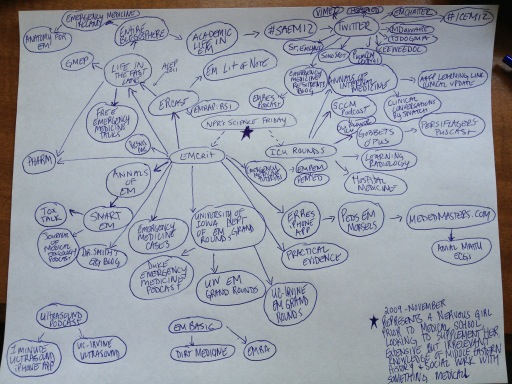
My FOAM journey